Wooden blinds for the kitchen: which options are best suited
Wooden blinds for the kitchen: which options are best
Choosing blinds for the kitchen is not only a matter of aesthetics, but also practicality. The kitchen space has its own characteristics: high humidity, temperature fluctuations, frequent cleaning. In this context, wooden blinds become one of the best options, combining naturalness, functionality and durability. However, not all models of wooden blinds are equally well suited for the kitchen environment. In this article, we will consider which types of blinds are best used in the kitchen, how to choose the right material and what to pay attention to when buying.
Advantages of wooden blinds in the kitchen
Wooden blinds have a number of advantages that make them a popular choice for the kitchen. Firstly, wood, as a natural material, creates a cozy atmosphere and goes well with various interior styles - from classic to Scandinavian minimalism. Secondly, modern wooden blinds usually have a special coating that protects them from moisture and allows you to easily clean the surface. This is especially important in the conditions of daily cooking. In addition, wooden slats have sufficient density to effectively protect against sunlight, which is relevant in the summer, when the kitchen often overheats.
The best types of wooden blinds for the kitchen
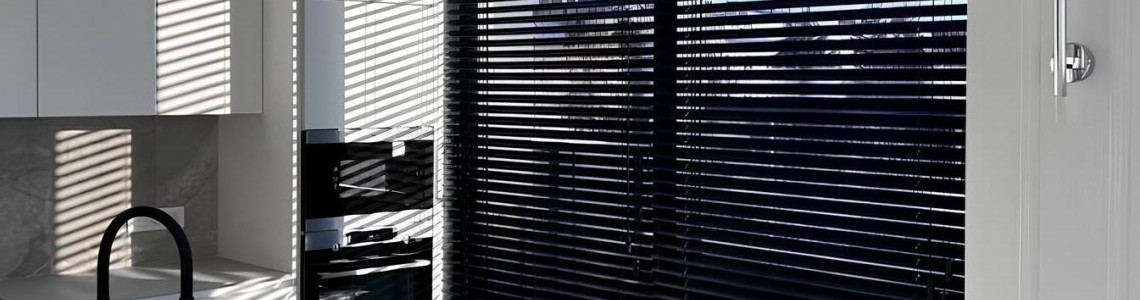
Horizontal wooden blinds are best suited for the kitchen. They are compact, easy to use and allow you to precisely adjust the flow of light. The slats can rotate, opening or completely closing access to light, which is especially convenient when conditions change during the day. An alternative option is bamboo roller blinds, which combine a natural look and moisture resistance. Such models look good in modern and environmentally friendly interiors. In the case when the kitchen has limited access to natural light, it is worth considering light shades of wood that visually expand the space.
Choosing a material: which types of wood are best
The material from which the blinds are made plays a key role in their durability and resistance to kitchen conditions. Most often, linden is used for manufacturing, as it is light, resistant to deformation and easily processed. Bamboo is also popular - although it is not a tree in the classical sense, in terms of performance characteristics it is one of the best materials for wet rooms. For the premium segment, breeds that are resistant to temperature changes and moisture, in particular teak or merbau, can be used. It is important that the blinds have a high-quality protective coating that prevents the absorption of moisture and fats.
How to choose blinds according to the style of the kitchen
In order for the blinds to harmoniously complement the interior, it is important to take into account the overall style of the kitchen. Natural shades of wood with a pronounced texture look good in classic kitchens. For modern interiors, such as minimalism or high-tech, models in cold, light colors with a smooth finish are more suitable. In the Scandinavian style, preference is given to white or gray shades of wood. It is also worth paying attention to the color of the furniture facades, countertops and wall decoration - the blinds should be harmoniously combined with other interior elements or, conversely, act as a contrasting accent.
Recommendations for installation and placement
In the kitchen, it is important to choose the right place to install the blinds. It is best if the window is not located directly next to the stove or sink, since contact with steam and grease reduces the service life of even high-quality models. The installation must be reliable, especially if the blinds will be opened and closed frequently. For windows that open inward, a mounting option that does not interfere with the movement of the sashes is recommended. It is also important to provide for the possibility of easy dismantling of the blinds for periodic cleaning.
Caring for wooden blinds in the kitchen
Wooden blinds in the kitchen require regular care to maintain their appearance and functionality. Cleaning should be carried out with a soft, slightly damp cloth without aggressive detergents. In case of significant contamination, a mild soap solution can be used. It is important to avoid excessive moisture and moisture residues on the surface, so as not to provoke deformation of the wood. Regular cleaning allows not only to preserve the aesthetic appearance of the blinds, but also to extend their service life.
More articles







People Also Bought