Curtains in the hallway: how to add coziness to a narrow space
The hallway is a place that forms the first impression of the house. It is here that we welcome guests, move from the external environment to a private space, and tune in to the home atmosphere. However, in most apartments, the hallway has a number of features: a narrow corridor, lack of natural light, a minimum of decorative accents. Because of this, it often looks cold, too functional and uncomfortable. One of the simplest and at the same time most effective ways to correct the situation is to choose the right curtains for the hallway .
Textiles are not only an aesthetic element. They can soften the geometry of space, balance proportions, absorb unnecessary sounds, hide technical areas, and create a sense of completion. For narrow corridors, curtains become a real design tool that works for both visual effect and comfort. In this article, we will look at how to choose curtains for a narrow space, which models are best suited for hallways, which colors and materials will look most convincing, and why individual tailoring in the "Your Interior" salon in Lviv is the best option for those who want a perfect result.
Why do you need curtains in the hallway?
Although the hallway is traditionally perceived as a technical area, in reality it is it that helps set the tone for the entire apartment. Properly selected curtains for the hallway perform several important functions at once.
1. Space zoning
Often, a hallway combines several zones: the entrance area, the transition to the living room, the wardrobe, access to storage rooms or bathrooms. Curtains allow you to create soft, smooth boundaries between these zones without massive doors. Curtains instead of doors are one of the most popular ways to save space in narrow corridors, where every centimeter counts.
2. Decorative function
Curtains in the hallway work as a soft decorative accent that literally enlivens the space. Even a light tulle can remove the feeling of "sterility" inherent in hallways with tiles, metal elements or bare walls. The fabric adds texture, warmth and creates a more homely atmosphere. In modern minimalist interiors, curtains often become the detail that softens the strict lines and makes the hallway cozy and pleasant for daily use.
3. Thermal insulation and draft blocking
In many homes, the hallway is the first to encounter cold air from the street, and this sometimes makes it seem as if a draft is "walking" throughout the entire apartment. This is especially noticeable in winter or in houses with older door structures. To reduce heat loss, it is often enough to hang thick curtains - they create an additional layer between the entrance and the living area. Warm curtain fabrics or blackout curtains significantly mitigate the impact of drafts, help retain heat better and make the hallway much more comfortable. Thanks to this solution, even a short winter "run" into the house is not accompanied by a sharp cold breath from the door.
4. Acoustic comfort
Narrow corridors often have an echo effect, with the sound of footsteps or voices bouncing off the walls. Curtains partially absorb the sound and create a quieter and more pleasant space.
5. Functionality and organization of space
Textiles can be used to hide shelves, storage areas, communications, electrical panels, or other elements that should not be in plain sight. This is a versatile and budget-friendly solution for neatness.
Which curtains are suitable for a narrow space?
In the hallway, it is important not only to choose a beautiful fabric, but also to choose the right type of curtains, because different models behave differently in a narrow space. Below we provide a detailed overview of the most effective curtain options for the hallway, with an explanation of when , why and in which interiors they work best.
1. Straight curtains
This is the most versatile type of curtain that fits almost any interior. Straight curtains in the hallway create a feeling of softness and completeness, especially if the hallway has sharp lines, many hard surfaces or looks too "cold".
In a narrow space, they are recommended to be used with discreet drapery: 1.5–2 fold ratio instead of 2.5–3, so that the curtains do not take up much space. Light linen, translucent or thin drapery fabrics work best.
Straight curtains are suitable for:
- zoning of the passage between the corridor and the living area;
- decorating niches where clothes or shoes are stored;
- soft covering of open cabinets or technical areas.
This is a good solution for classic, Scandinavian, modern and eclectic interiors.
2. Roman blinds
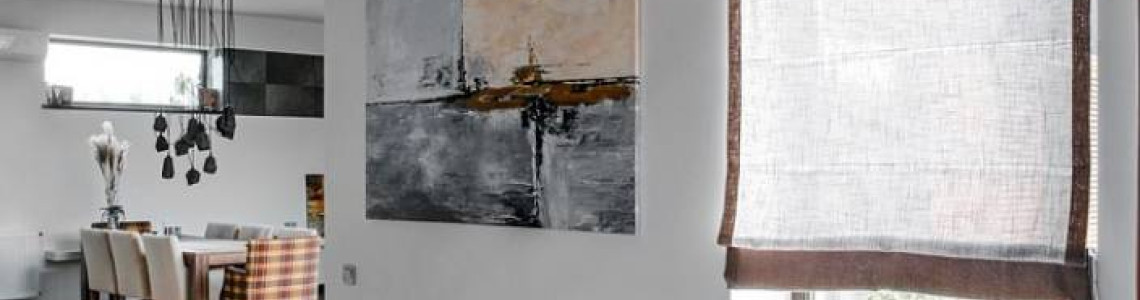
Roman blinds are compact, neat and functional. They are perfect for hallways with small windows or when you need to create a privacy zone without the extra bulk of fabric. Due to the fact that the fabric is gathered in even horizontal folds, Roman blinds do not protrude into the space and completely preserve the usable area.
They are used in:
- narrow corridors with a window, where classic curtains would look bulky;
- hidden niches that need to be closed in a compact way;
- projects where minimalism or modernism is important.
The advantages of Roman blinds are clean geometry, neatness, and the ability to control light without large canvases.
3. Tulle
For narrow and darkened hallways, light fabrics are a real salvation. Tulle or veil add air and light to the space, visually making it lighter and softer. Thanks to their translucent structure, such curtains delicately highlight individual zones, without overloading the room and without obstructing the lighting. This is the case when a minimum of material gives a maximum of decorative effect, helping the hallway look more organic and modern.
Tulle is often used:
- as a decorative element on a long wall so that it does not look "empty";
- in micro-apartments to disguise the storage area;
- for easy zoning when you need to separate the entrance group from the rest of the room.
In modern interiors, tulle with a light pattern or texture becomes a tool for creating depth and atmosphere.
4. Blackout and heavy curtain fabrics
Blackout curtains in the hallway serve an important function - they add thermal insulation, improve acoustics and act as a protective barrier against drafts. This is especially useful in private homes, old buildings or apartments with large temperature differences.
Such curtains are most often used:
- near the front door as a heat shield - especially in winter;
- for covering large niches with a boiler, washing machine or area for outerwear;
- as an alternative to doors when privacy is needed.
Dense fabrics should be chosen in a light palette so that they do not reduce the space. Textured options (linen, micro-jacquard, structured polyester) help add volume without obscuring it.
5. Textile panels
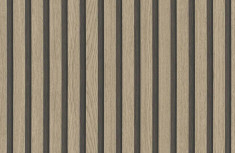
Panel curtains are a modern solution that looks great in minimalist, Japanese, Scandinavian and modern interiors. They are flat vertical panels that move along multi-row guides. They do not create folds, which makes them perfect for narrow spaces where every centimeter counts.
Panels are used for:
- visually aligning a long wall, making it more graphic;
- zoning the hallway from the living room;
- decorating niches or hiding closets.
Textile panels work well with fabrics with a light print, a light geometric pattern, or even with photo printing in the interior style.
6. Combined solutions
In modern interiors, several types of curtains are increasingly combined to obtain the most functional result. For example:
- tulle + decorative curtains — softness + protection from drafts;
- Roman curtains + panels — compactness + stylish accent;
- light veil + blackout — aesthetics + thermal insulation.
Combined solutions allow you to create an individual textile ensemble, adapted to the proportions and lighting of a specific hallway.
Designer's recommendations for choosing the type of curtains
- In very narrow hallways, avoid models that create large folds or protrude 20–30 cm forward.
- For darkened hallways, prefer tulle or light linen fabrics.
- If the hallway leads directly into the living space, curtains can serve as a visual "decorative transition."
- To increase the height of the hallway, use curtains with a vertical pattern or plain tall canvases.
- For small locations, it is better to use hidden cornices or ceiling systems - this creates the effect of lightness.
How to choose the color and material of curtains for the hallway
The color palette and texture of the fabric significantly affect the perception of space.
Light shades are the key to expanding space
The following colors are best suited for corridors with insufficient lighting:
- white and milky,
- creamy,
- light gray,
- pastel beige tones.
Light curtains act as light reflectors, creating a warmer and more spacious look.
Light fabrics are optimal for dark hallways
Materials to consider:
- thin veil;
- tulle with a soft texture;
- flax and half-flax;
- light-density microfiber.
Such fabrics create visual depth and are suitable for minimalist, Scandinavian or modern styles.
Dense materials - for areas with increased load
In the area near the front door, you can use denser fabrics:
- blackout,
- low-pile velvet,
- polyester curtains with thermal insulation effect.
It is important that they match the light palette of the walls and do not absorb too much light.
Combination of fabrics and styles
Combinations are one of the trends in modern interiors. For example:
- tulle + decorative curtains,
- textile panels + linen canvases,
- plain base + light geometric print.
This allows you to create harmony and individual style even in a small hallway.
Ideas for using curtains in the hallway
Proper placement of curtains makes the space more logical and aesthetic.
1. Curtains instead of doors
Perfect for small apartments, this is a great way to hide utility areas without cluttering up the space.
2. Curtains as an accent at the entrance
Using thick curtains near doors creates a sense of privacy and warmth.
3. Textile panels on a long wall
This is a stylish design technique that helps balance the shape of the hallway.
4. Combination of curtains with mirrors and lighting
The mirror opposite the textile creates a depth effect, and the LED lighting emphasizes the texture of the fabric.
5. Decorative tulle in the upper part of the hallway
Suitable for small spaces where a light textile accent is needed.
What mistakes should be avoided when decorating a hallway with curtains?
The wrong choice of fabric or color can ruin the impression of a space. Avoid:
- Too many dark and massive fabrics in narrow corridors - they reduce the space.
- Large drapery - it looks bulky in small rooms.
- Sharp color contrasts that interrupt the composition.
- Lack of warm lighting - curtains need proper lighting to look good.
- Incorrect installation of the cornice - too low a mount visually reduces the height.
Tailoring of curtains to order for the hallway in Lviv
For the perfect result, it is worth ordering curtains individually. The "Your Interior" salon in Lviv offers a comprehensive approach that takes into account all the features of your hallway.
What we offer:
- Professional measurements - accuracy in tight spaces is critical.
- Selection of fabrics for the interior , lighting and functions of the space.
- Consultation with a designer who will help you avoid common mistakes.
- Custom-made curtains in Lviv - perfect fit, impeccable quality.
- Installation of cornices and installation of textiles .
We work with fabrics of different densities, textures, and styles, which allows us to create solutions for any interior - from classic to minimalist.
Contacts of the salon "Your Interior"
Phone: (067) 620-20-49
Curtains in the hallway are one of the most effective ways to make a narrow corridor cozy, harmonious and stylish. They perform the function of zoning, improve acoustics, add warmth and become an important decorative accent. Properly selected textiles can completely change the mood of the hallway and emphasize the individuality of the house.
If you are looking for quality curtains in Lviv , contact the salon "Your Interior" . We will help you create an interior that you will want to return to every day.
More articles

People Also Bought