Curtain Fabrics: Linen, Voile, Velvet, Blackout — Pros and Cons
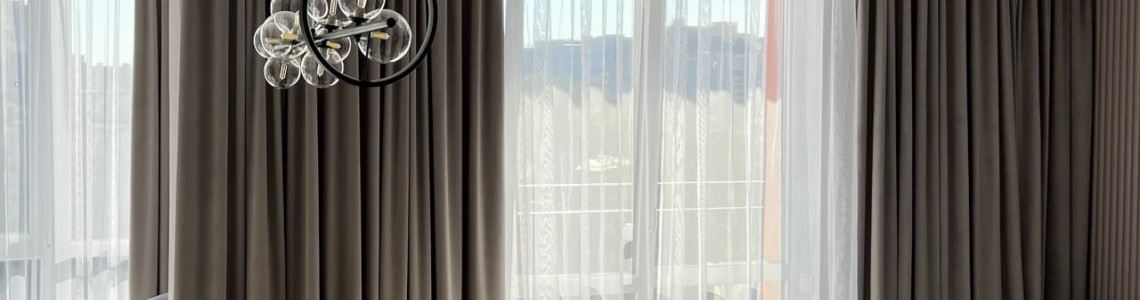
Without textiles, the interior looks empty and unfinished. Properly selected curtains transform the space. When it comes to curtain materials, it is important to consider more than just color or texture. It is the fabric that determines the level of illumination, the feeling of comfort, practicality and durability. Finding the best option is not easy: linen can wrinkle after ironing, veil - look ephemeral, velvet - be too heavy for the cornices. Blackout - seem cold and technical. Often these nuances are overlooked when choosing, and the final result can be disappointing. In this article, we will compare in detail the four most popular fabrics - linen, veil, velvet and blackout - in terms of their advantages, weaknesses, purpose, care and features of interior use. Do you know which one will fit best in your room? Which of these materials is right for you? Let's compare them in terms of functionality, appearance and practicality.
Overview of popular fabrics
When choosing materials for curtains, it is important to understand not only how they look, but also how they behave operationally. The modern market offers a wide selection - from natural fabrics such as linen, organza, cotton and silk, to synthetic ones - jacquard, blackout, microvelor or even burlap and textiles with imitation of natural fibers. However, among this variety, four materials are the most universal: they cover the style from eco-minimalism to classic luxury and provide the necessary functions.
Linen - natural, light, with an expressive texture, which "breathes" and creates soft lighting, ideal for a calm interior.
Voile - a thin transparent fabric that fills the room with gentle, diffused light and adds airiness to the space.
Velvet - a dense, pile textile that instantly adds a feeling of luxury, comfort, and also absorbs sound and heat well.
Blackout is a technical fabric that darkens the room as much as possible, increasing comfort for sleeping or working, while allowing you to retain heat and insulate from external noise.
These four options cover the entire spectrum - from light, airy and environmentally friendly solutions to functional and energy-efficient solutions. Other fabrics, such as jacquard or chenille, although decoratively attractive, are less practical for widespread everyday use: they require special care, have limited use or are more expensive. Our choice is based on their ability to combine style, comfort, practicality and compliance with various interior scenarios.
Linen: natural calm and lightness
Origin and texture
Linen is made from the fibers of the flax plant, and its structure is naturally striking - a matte surface with a distinct interweaving of threads creates
elegant, but at the same time calm look. The fabric literally "breathes": due to the light woven pattern, air circulates freely, which is especially important in the bedroom or living room.
Advantages
• Naturalness and environmental friendliness - 100% natural material, without aggressive chemicals, which makes linen safe for children's rooms and people sensitive to synthetics.
• Air permeability - thanks to this, linen regulates the internal microclimate: it does not steam in the summer, it does not become cold in the winter. Over the years, the fabric wrinkles and acquires a noble appearance without losing its shape.
• Texture and aesthetics - the natural structure does not shine and does not overload the space, perfectly complements pastel or natural palettes.
• Ease and convenience in use - linen creates an airy drapery effect, but does not seem too "airy", preserving shape and volume.
Disadvantages
• Tendency to crease - linen easily forms folds, especially after washing or during active use.
Shrinkage - without care during washing, it can shrink in size.
• Sun and light - without a lining, it can fade, and also let in more light than intended.
For which rooms
• Living room - adds lightness and naturalness, does not distract from furniture or decorative accents.
• Bedroom - light linen curtains create cool and light lighting, without interfering with a night's rest.
• Kitchen - natural appearance and breathability make linen great for ventilated rooms.
• Children's - the naturalness and safety of the material makes it acceptable even for a child's room, with the exception of active games or painting.
Interior styles
Linen organically fits into Scandinavian minimalism, eco-form, country, Provence - designs with natural textures, wood and a light palette. It gently removes the coldness of the space and adds textural nature.
Care
• Wash by hand or in the machine on a delicate cycle, using mild detergents.
• Dry flat - this way the linen wrinkles less.
• Iron at medium-high temperature while the fabric is still slightly damp.
• It is always recommended to use a lining - it protects the curtains from fading and increases their service life.
Our designer's advice
• Use wooden or metal cornices of natural color, which emphasize the naturalness of linen.
• Combine with cotton textiles or light blackout in layering to get soft darkening without losing the natural look.
• Be careful with colors - pastel or delicate earthy shades are best suited to the structure of linen.
• Do not overload the composition with details - linen works better in calm, unobtrusive solutions.
Voile: airy lightness and transparency
What is voile fabric
Voile is a very light, translucent fabric, usually made of cotton, linen, polyester or synthetic blends. Its texture resembles tulle: thin, In about 90% of curtain orders, the veil serves as a decorative layer, creating soft transitions of light and adding completeness to the interior.
Advantages
• Light filtration and lightness: the veil scatters bright rays, creating gentle soft lighting without shadows or darkening
• Air permeability: the fabric does not interfere with ventilation, allowing the room to "breathe" even in the heat
• Dark view, light filling: the room is visible from the outside, but outside views are blurred. Ideal for residential areas.
• Color palette: the veil is available in a large color range - from classic white to pastel and delicate shades.
Disadvantages
• Partial privacy: provides privacy only during the day, in the dark it lets in light and shadows.
• Requires an additional layer: usually combined with the main curtain (blackout, thick linen, blinds).
• Fragility: the delicate structure of the fabric is sensitive to tears, not suitable for active use or a children's room.
Optimal rooms for use
• Living room - provides lightness and smooth background
• Bedroom - as a decorative layer for the main curtain
• Decorative areas - arches, balcony openings, loggias
Suitable interior style
Ideal for Provence, romantic, modern and Scandinavian style, as well as classic. The veil adds softness to the space without overloading the design.
Care instructions
• Washing: by hand or on delicate mode, using mild detergents.
• Drying: without spinning, on a flat surface or hung naturally.
• Ironing: usually not necessary; if necessary, carefully at a low temperature.
Our designers' recommendations
• Use in a two-layer system: the veil lets in daylight, and a thick curtain (for example, a blackout) provides protection and privacy.
• Color harmony: pastel shades of the veil complement the blackout of a dark or saturated color well, they do not claim to be an accent.
• Relief or painted prints - perfectly introduce texture and do not overload the space. Recently, tulle with a delicate herringbone texture has been popular. But we advise you to avoid rough things - the delicate function of the veil requires a delicate approach.
Velvet: textured luxury - depth and style
Velvet is a dense, pile fabric with a distinctive texture that immediately gives any space a feeling of luxury and comfort. It can be made of natural cotton, noble silk or synthetic fibers, sometimes in combination. The surface of velvet is soft and has a muted shine, and the pile threads create an elegant play of light and shadow. A dense fabric with a pile that adds depth and visual richness is often used as an accent. It is more often used in classic interiors, or neoclassical, modern art nouveau. Velvet curtains love multi-layering. They go well with a veil or lace tulle with openwork edges - this is a more traditional combination.
Advantages
• An exquisite look that will make the interior more status and cozy;
• Excellent ability to absorb light and sound - suitable for bedrooms or recreation areas;
• Ideal for creating an accent or art drapery.
Disadvantages
• Velvet is quite heavy, so it is important to install a reliable cornice and strong fasteners;
• Requires dry cleaning - does not tolerate regular washing or ironing;
• Not recommended for humid rooms - may lose texture or form stains;
• Often more expensive than other fabric options.
For which rooms
• Bedroom: creates an atmosphere of coziness, silence and comfort for sleeping;
• Guest or premium study: the material will emphasize elegance and add a luxurious look;
• Recreation area or lounge: soft pile soothes, creates a comfortable atmosphere.
Interior styles
Velvet is great for classic, art deco and modern modern styles. In interiors with a minimalist platform, it works well as an accent - for example, a separate curtain can create an atmosphere without overloading the space.
Care
• Ensure dry cleaning only to preserve the shape and texture of the fabric;
• Do not iron - an iron can damage the pile and change the texture;
• Store in a clean, dry and ventilated room, protected from direct sunlight.
Our designer's recommendations
• Choose velvet in noble colors - dark green, burgundy, deep blue, graphite shades - they will best emphasize the texture of the fabric;
• Use velvet as an accent fabric, and not for all windows;
• Goes well with natural materials - dark wood, metal elements, brass or black accents;
• Pay attention to the freedom of air - warm rooms are sometimes overloaded in the cold season, so you can add a light layer, for example, from linen or veil.
• Modern solution: combine velvet curtains with wooden blinds of dark shades.
Blackout: blackout and comfort
What is blackout fabric
The term "blackout" comes from the English word blackout and means "complete blackout". This fabric is designed to almost completely block the penetration of light - especially relevant in regions with so-called "white nights". The structure consists of tightly woven fibers, sometimes with an acrylic coating or a rubberized base. In our orders, blackout curtains are one of the most popular options, often used as a lining for linen, velvet or microvelor.
In the interior, such curtains look concise: usually a monochromatic, calm palette without a pronounced texture. The price of camouflage is versatility: blackout does not burden the style, leaving freedom for the decorative layer on top.
Advantages
• Absolute blackout - almost 100% of light, even in bright sunlight, creates comfortable conditions for sleeping during the day or working under a projector.
• Thermal insulation and noise reduction - the dense structure retains cold air and reduces sound vibrations, which is convenient in bedrooms or student areas.
• Fade resistance - the matte surface and synthetic fibers do not react to sunlight.
• One of the few fabrics that almost does not age - retains its shape, color and performance properties for years.
Disadvantages
• Synthetic composition - the vast majority of fibers are artificial, which can be a minus for supporters of naturalness.
• Heavy weight - the fabric is stiff, which creates an additional load on the cornice and fasteners.
• Short-lived in humid rooms - poor air circulation can cause the appearance of moisture or fungus.
• Possible discomfort - due to its "technicality", the fabric does not add comfort if used solo without a layer of textile design.
Where to use
• Bedrooms - for comfortable and dark rest.
• Children's rooms, where daytime sleep does not interfere with active light.
• Rooms with a projector or home theaters - provide ideal darkening conditions.
• Studios, offices - when you need to isolate external sources of light or noise.
Interior styles
Works best in minimalist, smart designs, hi tech. Used as a base for a decorative layer, allowing you to achieve a functional and clean look without excess details.
Care
• Hand or machine wash up to 30°C, if the manufacturer allows it - without harsh cycles.
• Hang flat - to avoid wrinkles and mechanical defects.
• Iron inside out or steam, but carefully - high temperatures can damage the coating.
• Regularly ventilate the room - this reduces the risk of moisture accumulation.
Our designers' tips
• Use blackout as a lining for fabrics such as linen or velvet - this will add texture without losing functionality.
• It is better to install it tightly to the wall or window frame to avoid "light gaps" on the sides - the curtains should be wider than the window.
• In warm seasons - combine with light vumal or thin linen, then you can change the atmosphere depending on the lighting.
Material Comparison
Characteristics Linen Voile Velvet Blackout
Transparency Medium High Low Zero
Naturalness High Medium Medium Low
Care Medium Easy Complicated Moderate
Appearance Natural Airy Luxurious Discreet
Rated Price Medium Low High Medium
Choosing which fabric is better for curtains depends on what you value: naturalness, transparency, luxury or blackout.
• Linen — a calm, "breathable", eco-friendly option.
• Voile — light and lightness.
• Velvet — texture, sound absorption, accent.
• Blackout — blackout, thermal insulation, silence.
When choosing curtains, it is important to consider not only the design, but also the composition of the fabric, functionality and features of the room.
Linen - for lovers of natural, veil - for lightness, velvet - for luxury, blackout - for practicality.
If in doubt, it is better to seek advice - this will help to avoid mistakes. Not sure? Our company's assortment includes samples of European, American and Turkish fabrics for interior textiles. We have collected for you the most interesting collections from around the world - fabrics of different textures, textures, colors and shades. You can touch the fabric, feel it and imagine how it will look in your interior. It is very convenient when there is a large selection and everything in one place. But we understand that in the final version our client needs not just fabric for curtains, but a ready-made solution and products. And here our designers will come to the rescue. They will help you navigate the assortment, select the necessary fabric, draw a sketch and control the entire manufacturing process. For those who are unsure of how the finished curtain from the chosen fabric will look, we have sewn samples with the most popular ribbons and fabrics to clearly see how the fabric assembly and the sewing itself will look. Leave a request, and our consultant will select the perfect option according to your interior, room purpose, and budget.
More articles

People Also Bought